



In this guide
What to do first
- 1
Keep everyone away
Keep children and pets out of the area. Sewage can carry bacteria and viruses, so avoid touching it.
- 2
Stop using water
No showers, toilets, washing machine or dishwasher. Every litre you send down has to go somewhere.
- 3
Keep clear of power
If sewage or water is near powerpoints or appliances, stay out and don't touch them. Only switch off at the board if you can reach it safely, and stay dry.
- 4
Work out if it's just you
If neighbours have the same problem, or sewage is coming from a public maintenance hole, it may be the sewer main. Contact your local water service provider.
- 5
Call a plumber
If it looks to be on your property, call us. Tell us where it's coming out and what's been happening.
What an overflow gully does
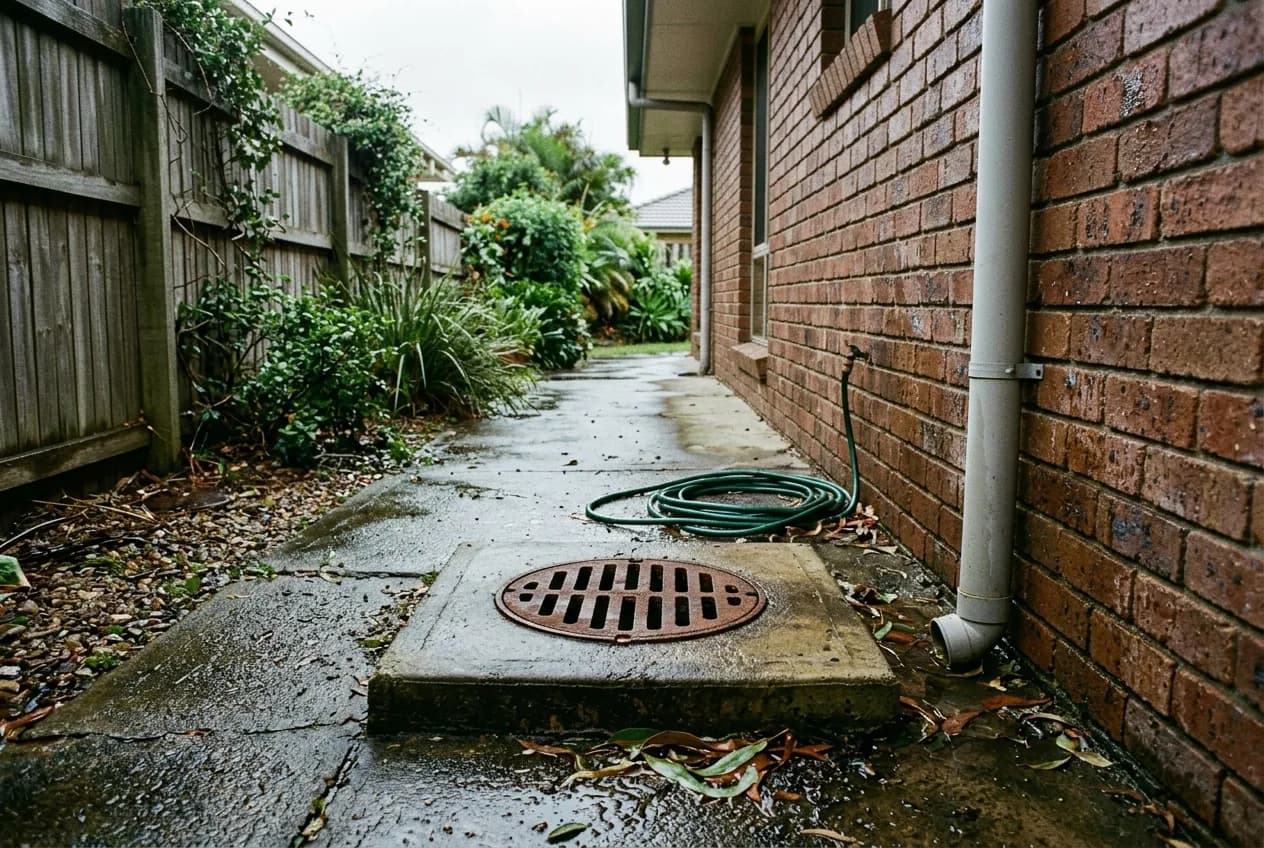
Many homes have an overflow relief gully outside: a small round grate, usually near the house and set lower than the floor drains. If the sewer blocks, it's designed to let sewage out into the yard instead of up through your shower or toilet.
So it's an unpleasant sight, but it may be doing its job. If the grate has lifted or there's sewage around it, treat it as a sign of a blockage downstream. Don't cover it or block it up.
What's a boundary trap?
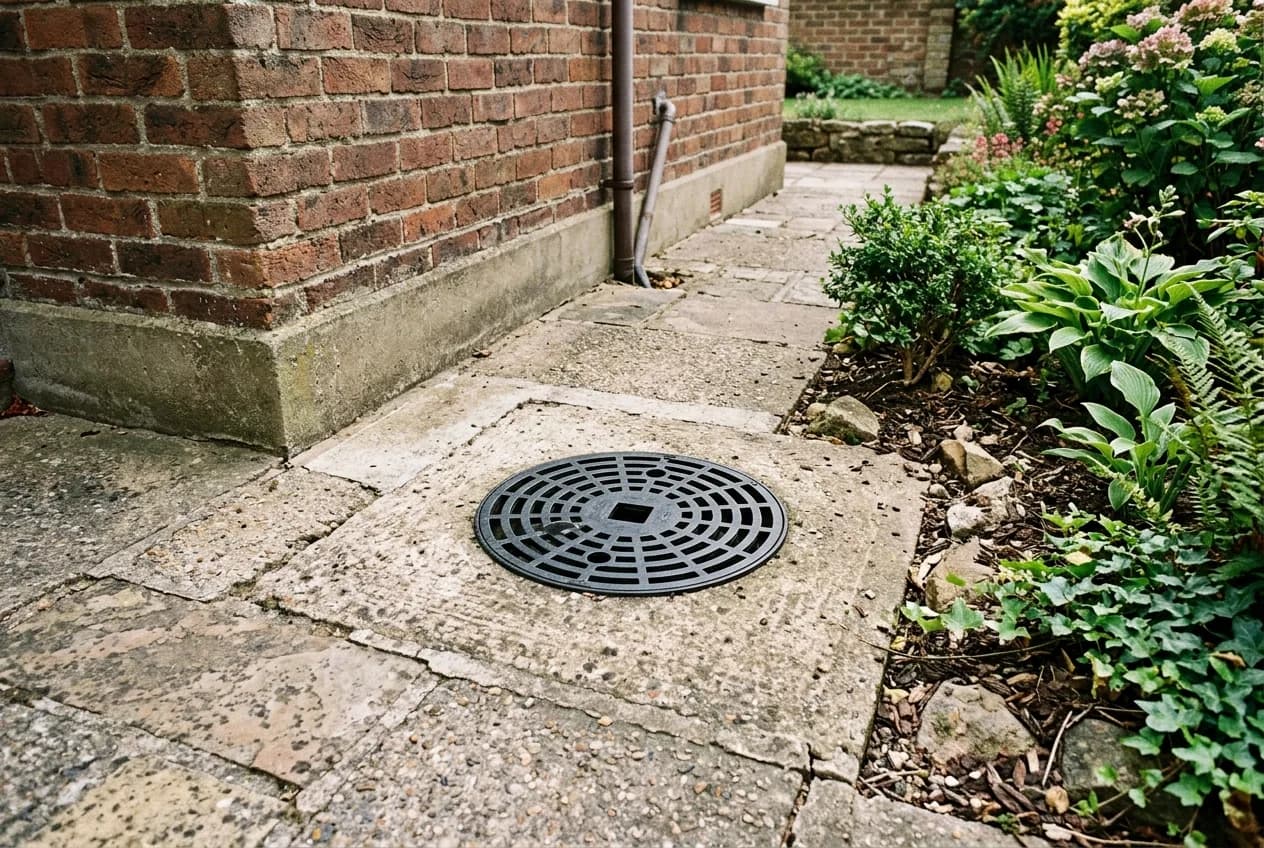
A boundary trap is a U-shaped section of sewer pipe, often found near the property boundary on older properties. It holds water to help stop gases from the sewer main coming back up your line, and it usually has a capped opening above it.
Because of its shape, it's also a place where blockages can form. If yours has been giving trouble, a plumber can check it and explain what your options are.
Common causes
- Tree roots in the sewer line
- Wipes, sanitary products and other things that shouldn't be flushed
- Grease from the kitchen building up in the line
- A cracked, displaced or collapsed section of pipe
- Stormwater getting into the sewer during heavy rain
If you have a sewer smell inside
A smell doesn't always mean an overflow is on the way. A floor waste or rarely used fixture can dry out and let gases through, and running some water into it may help. If the smell stays, gets stronger or comes with gurgling and slow drains, it's worth having looked at.
Who's responsible for what
As a general rule, the property owner looks after the private pipes on their property and the water service provider looks after the sewer main, but it can vary with how a property connects. If you rent, tell your landlord or agent as soon as you can. If you're in a unit or townhouse, check with your body corporate.
Cleaning up afterwards
Wait until the blockage is fixed. Wear gloves and sturdy footwear, keep kids and pets away until it's done, and wash up well. Absorbent items like carpet or plasterboard that sewage has reached may need specialist cleaning or replacing, and it's worth talking to your insurer before throwing anything out.