


Gas leak detection Brisbane
Smell gas? Get out first. We'll find the leak.
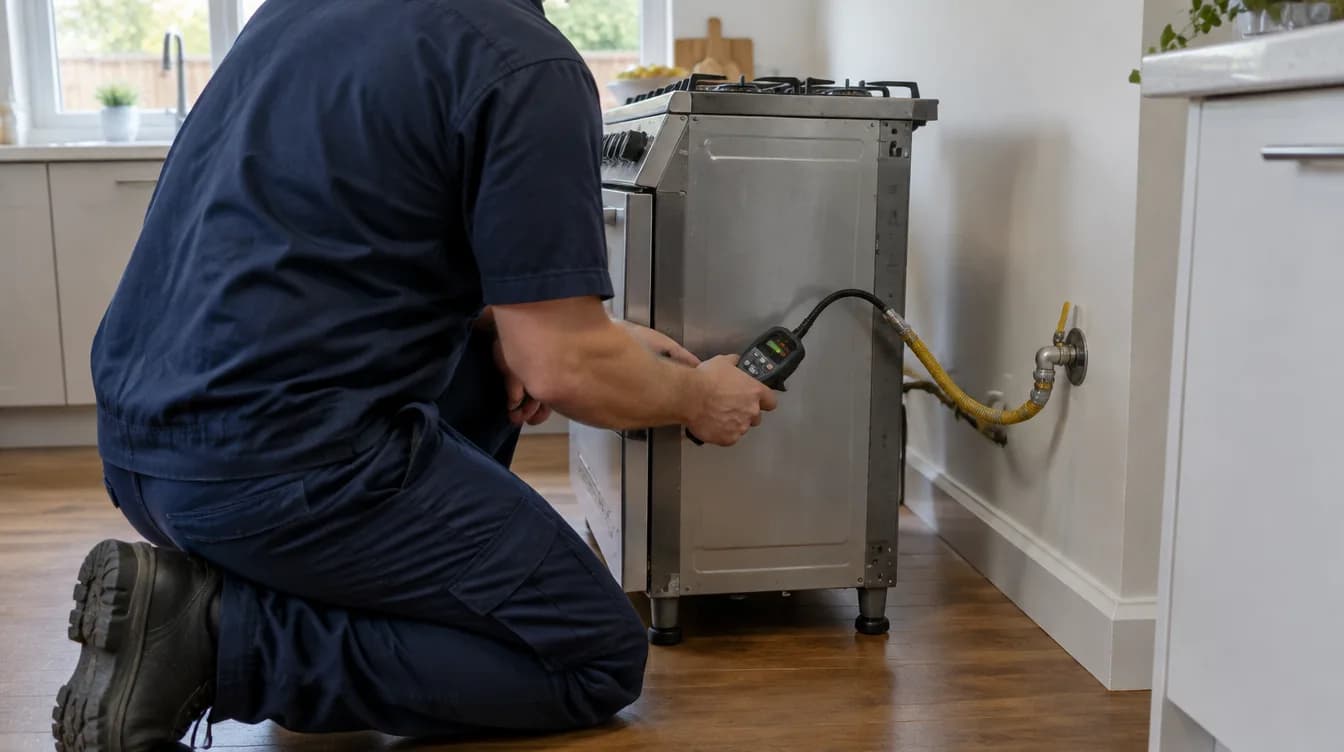
A gas leak can hide behind a wall, under a slab or at a fitting outside. Our licensed gas fitters track it down with proper gas leak detection equipment, repair it, and test the line before the gas goes back on.
The short version
- 1Pressure testing and electronic detectors, not guesswork
- 2Leaks found in appliances, fittings and underground lines
- 3Gas leak calls booked same day during operating hours
Signs of a gas leak at home
Is it a leak, or just an old appliance?
Leaks happen in walls, under floors and at outdoor connections, so the clues are often indirect. Tick what you've noticed.
Your result
Tick what you've noticed
Any one of these is worth mentioning when you call. We'll match them to the likely cause.
A guide only. If you smell gas, don't wait for a checklist: leave and call from outside.
What to do if you smell gas
Leave first. Phone from outside.
Stay calm and keep it simple. Your only job right now is getting everyone out without making a spark.
- 1
Don't make a spark
Leave light switches, appliances and power points exactly as they are. Don't light a match, lighter or cigarette, and don't use your phone inside.
- 2
Open up on the way out
If it's quick and easy, open doors and windows as you leave so the gas can clear. Don't hunt for the leak.
- 3
Get everyone out
People and pets, well away from the house. Don't go back in for belongings.
- 4
Turn the gas off, if it's safe
Only if you can reach the meter valve or LPG cylinder easily and without walking through the smell. If in doubt, leave it.
- 5
Call the emergency line from outside
Ring your gas distributor's or retailer's emergency line (it's usually on your gas bill). If there's a fire or someone is unwell, call 000.
Don't go back in until it's safe
Wait outside until the supply is isolated and the area is clear. Then call a licensed gas fitter to find and repair the leak. That's where we come in.
07 3335 5607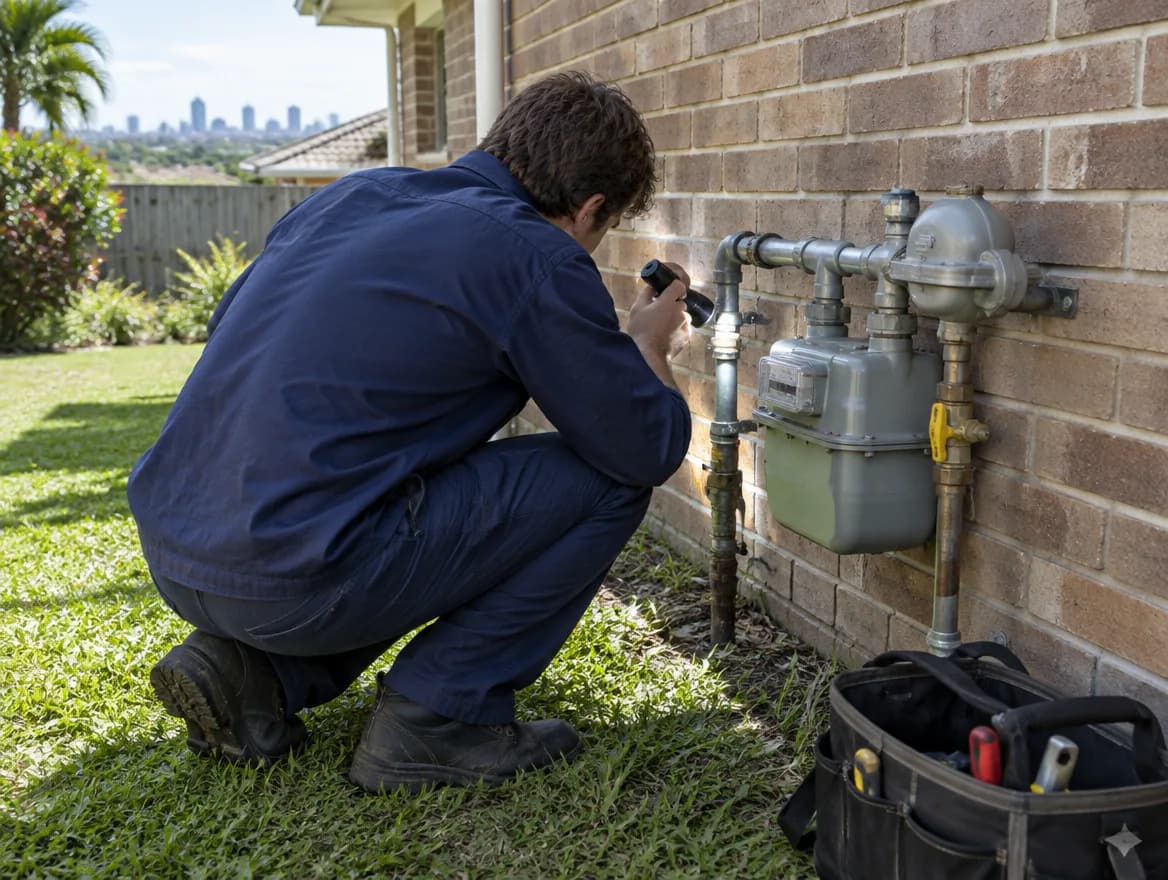
Emergency gas leak detection
A small leak today is a bigger risk tomorrow.
Gas leaks rarely fix themselves. A worn seal or a loose fitting tends to get worse, and the gas you're paying for drifts into a wall cavity, a subfloor or the garden instead of your appliance.
We offer same-day emergency service during operating hours across Brisbane, Moreton Bay, Logan and the Redlands. Our licensed gas fitters find the leak, repair it and pressure test the line, so you know it's sound before you use it again.
- Cooktops, ovens and heaters
- Gas hot water systems
- Meters, regulators and fittings
- Underground and in-wall gas pipes
Suspect a slow leak, but no strong smell?
Higher bills or a pilot that won't stay lit are worth a proper test. Tell us what you've noticed and we'll book a gas fitter in.
How we detect gas leaks
Narrow it down, then pinpoint it.
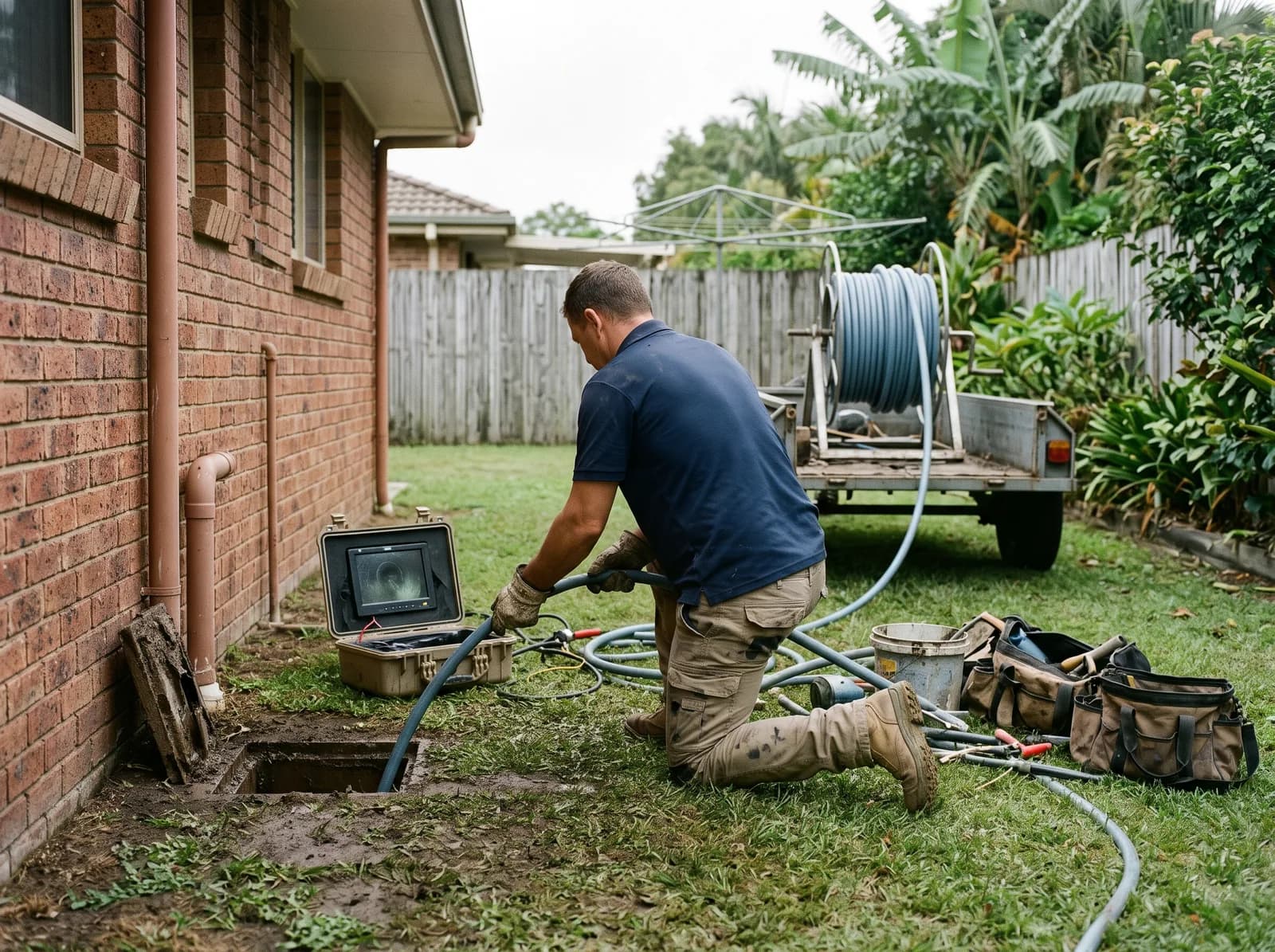
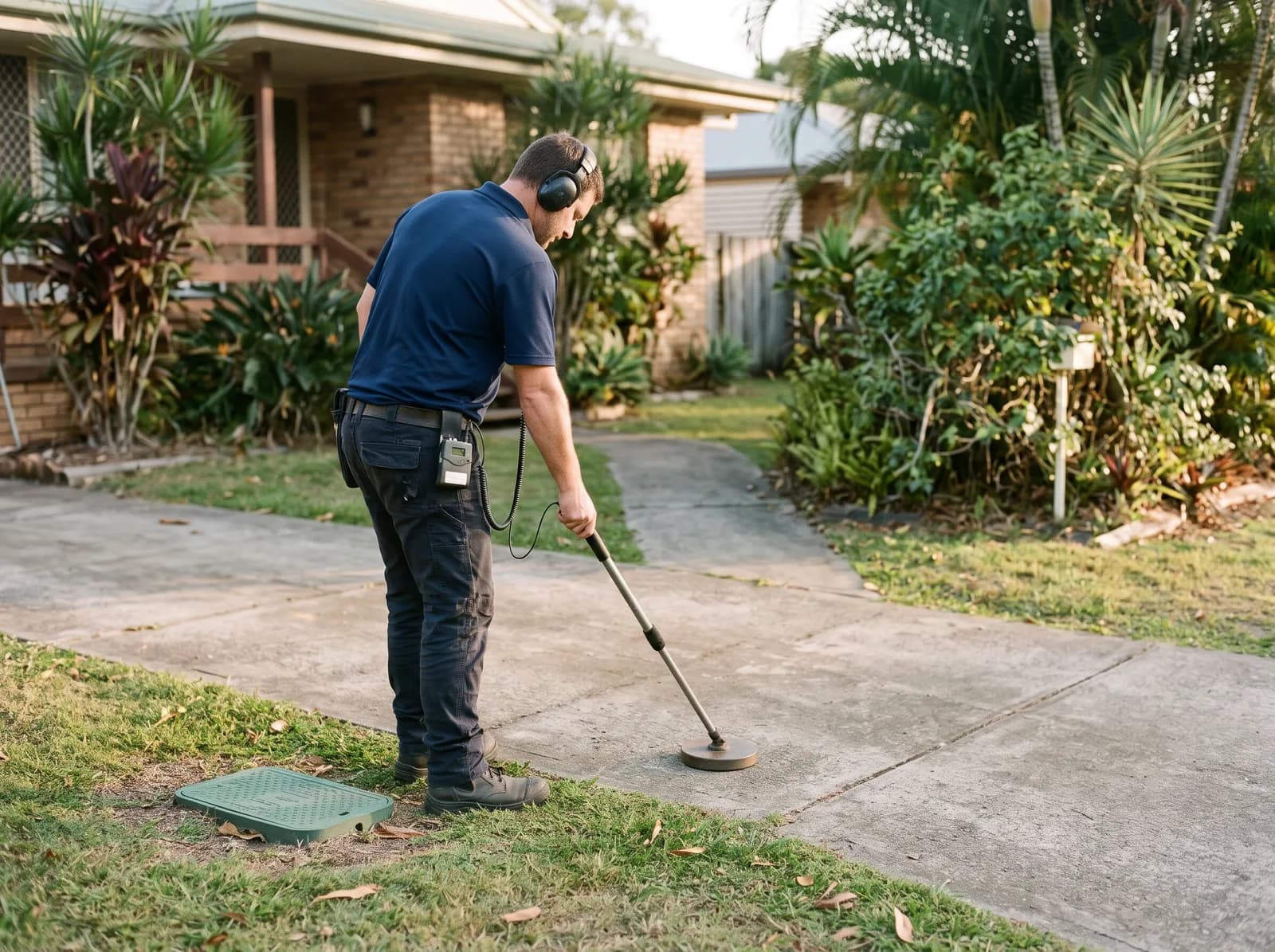
Leaks can sit behind walls, under slabs, in ceilings or underground. We work from the meter outwards so nothing gets missed.
Step 01
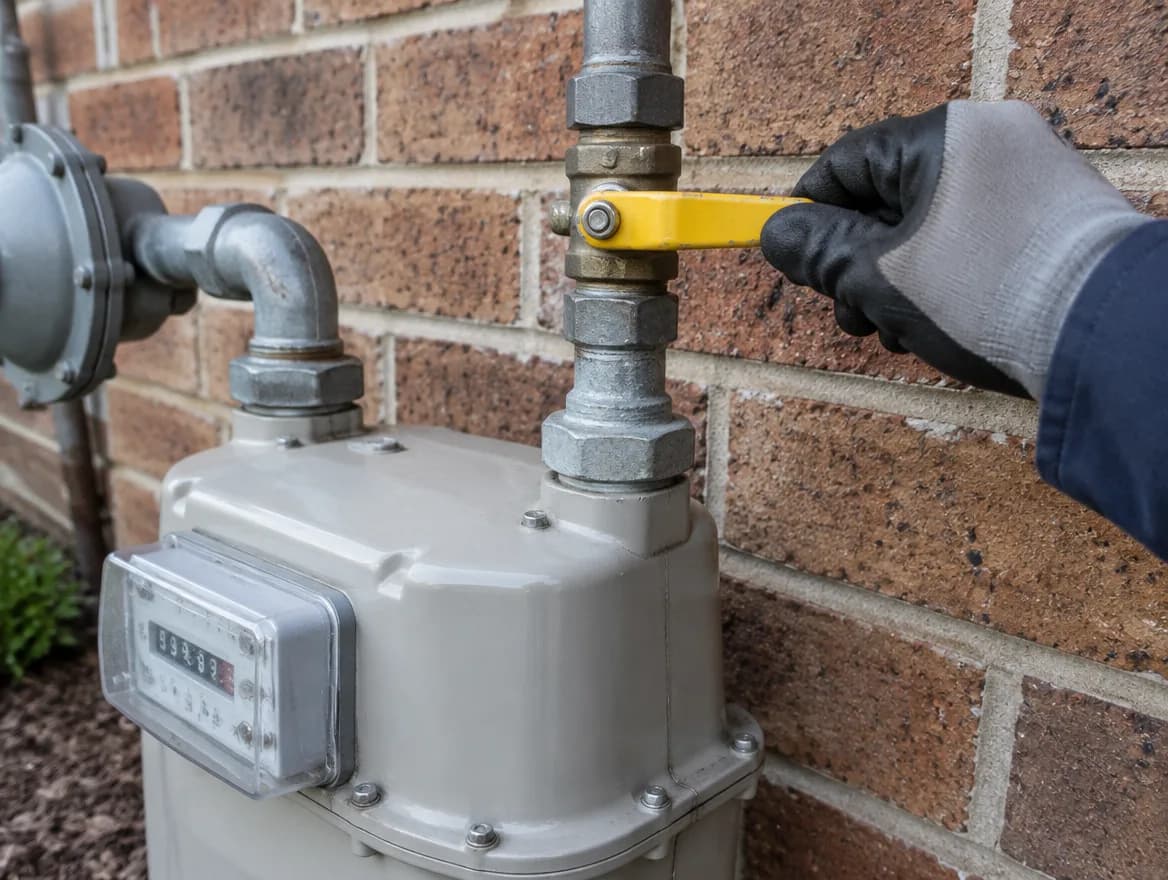
Make it safe
We isolate the supply at the meter or cylinder, ventilate where needed, and ask what you've noticed: where the smell is strongest, and when it started.
Step 02
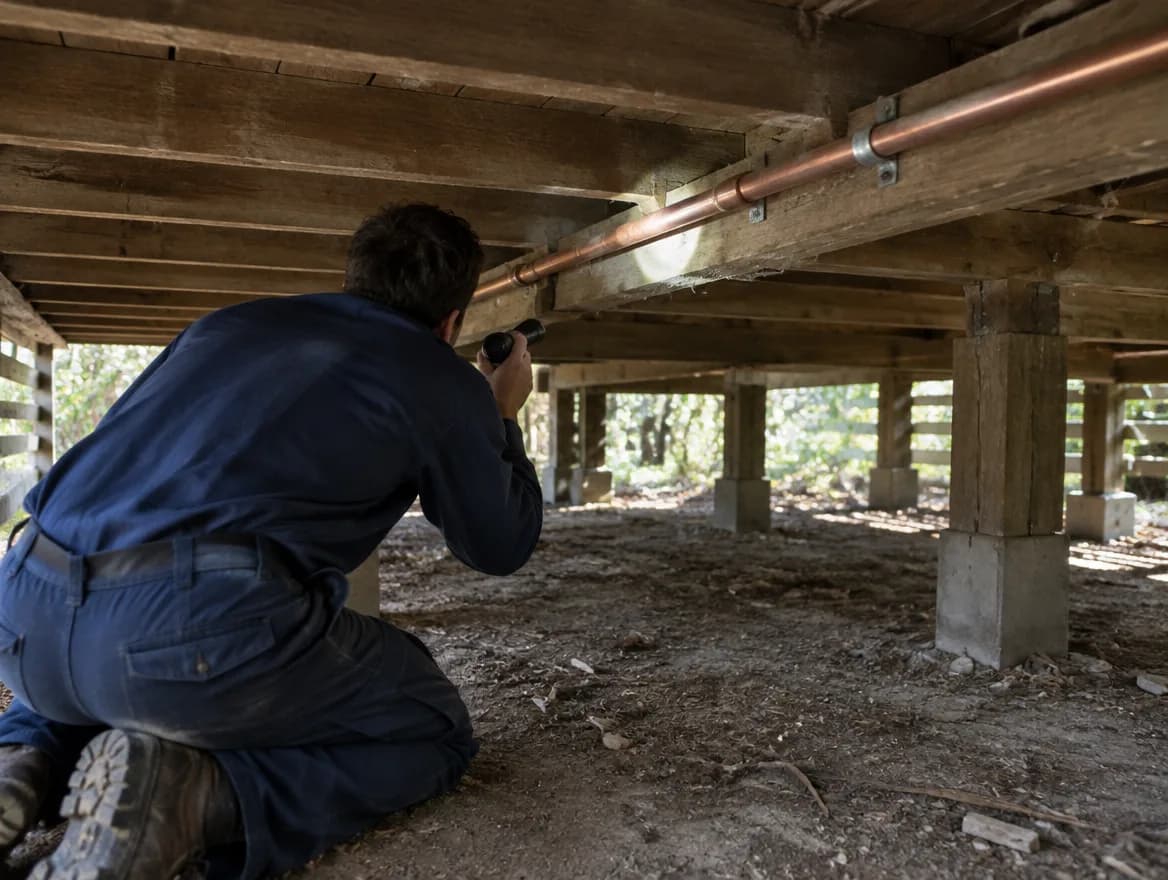
Look along the line
A visual check of the pipework, fittings and appliances, including subfloors and outdoor runs, for damage, corrosion or loose joints.
Step 03
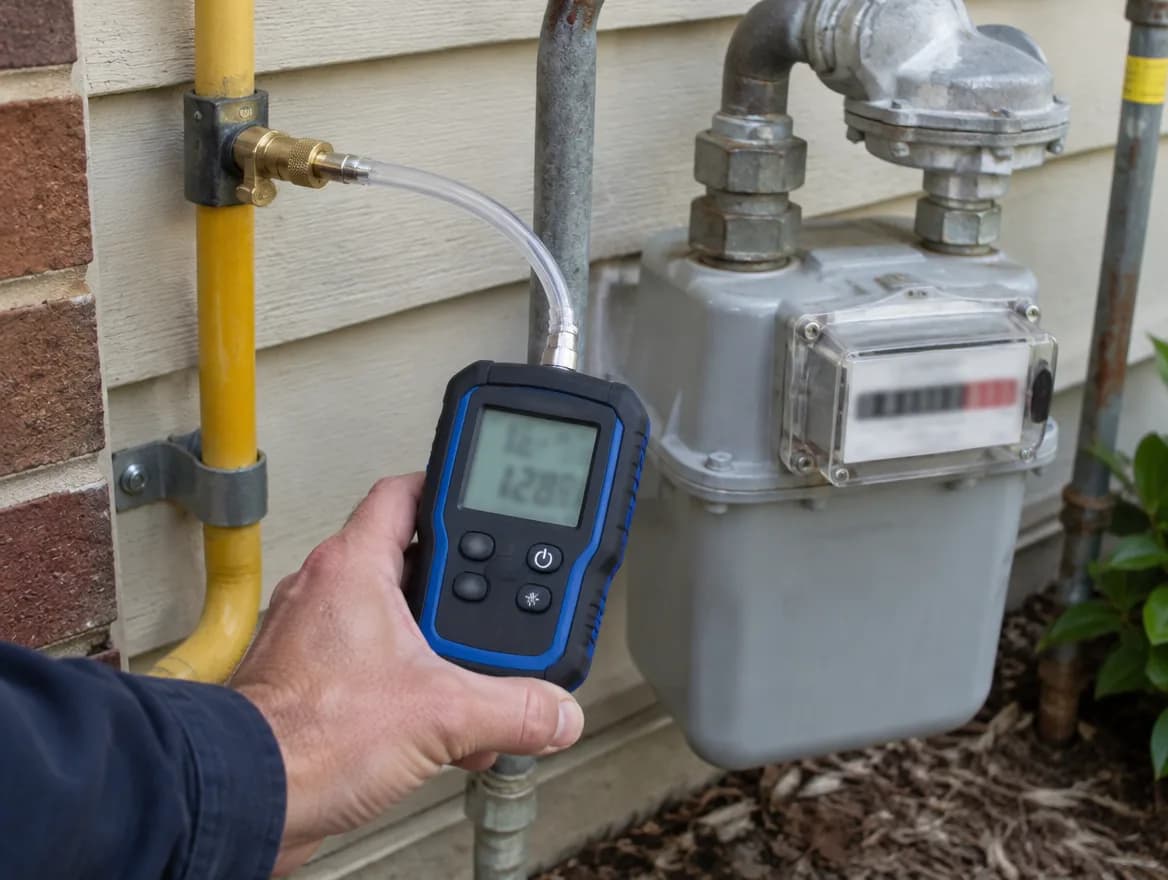
Pressure test the system
We pressurise the line and watch a gauge. If the pressure drops, gas is escaping somewhere, and testing sections in turn tells us which part.
Step 04
Pinpoint, repair, retest
An electronic gas detector and leak detection fluid find the exact joint. Once it's repaired, we test again to confirm the line holds.
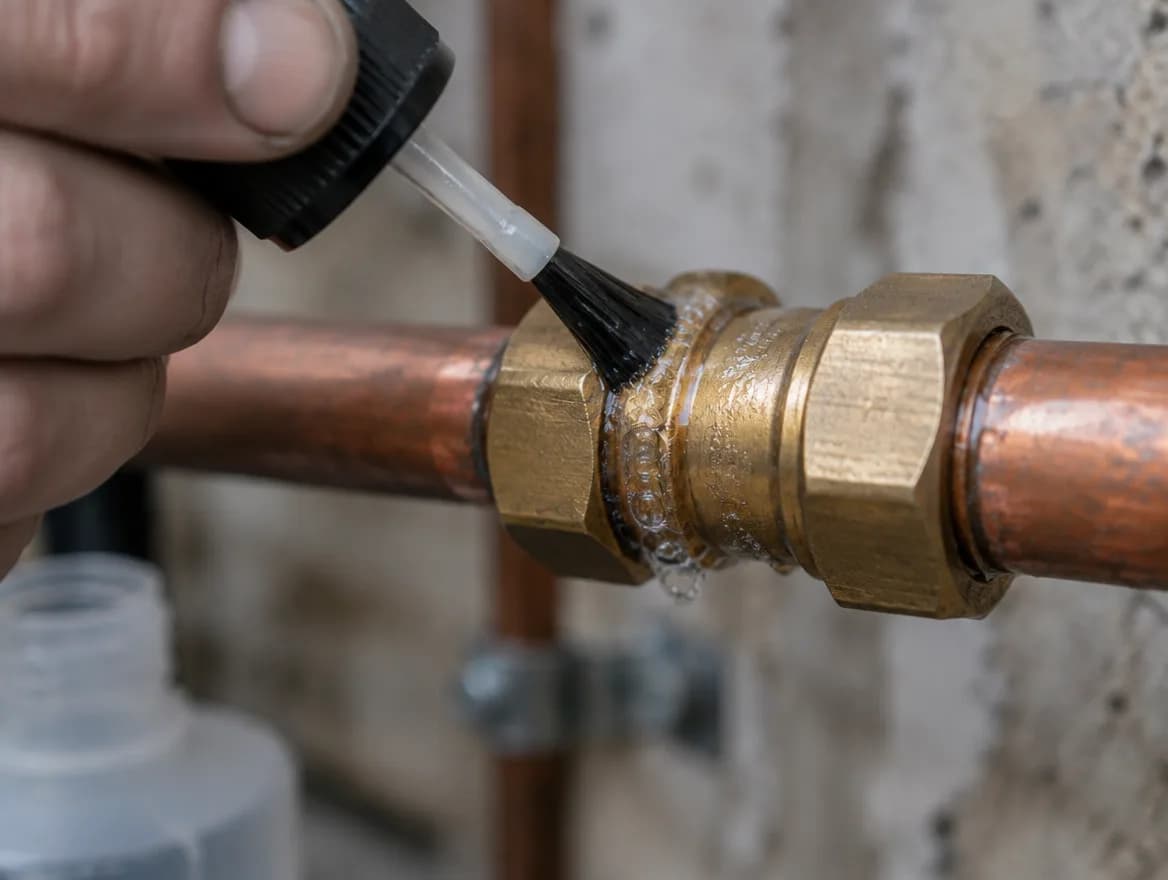
Every repair is followed by a leak test before the appliance goes back into use.
What gas stove flames are normal?
Your burner flame is a quick health check.
Flame colour tells you how cleanly an appliance is burning. Poor combustion can produce carbon monoxide, which you can't see or smell.
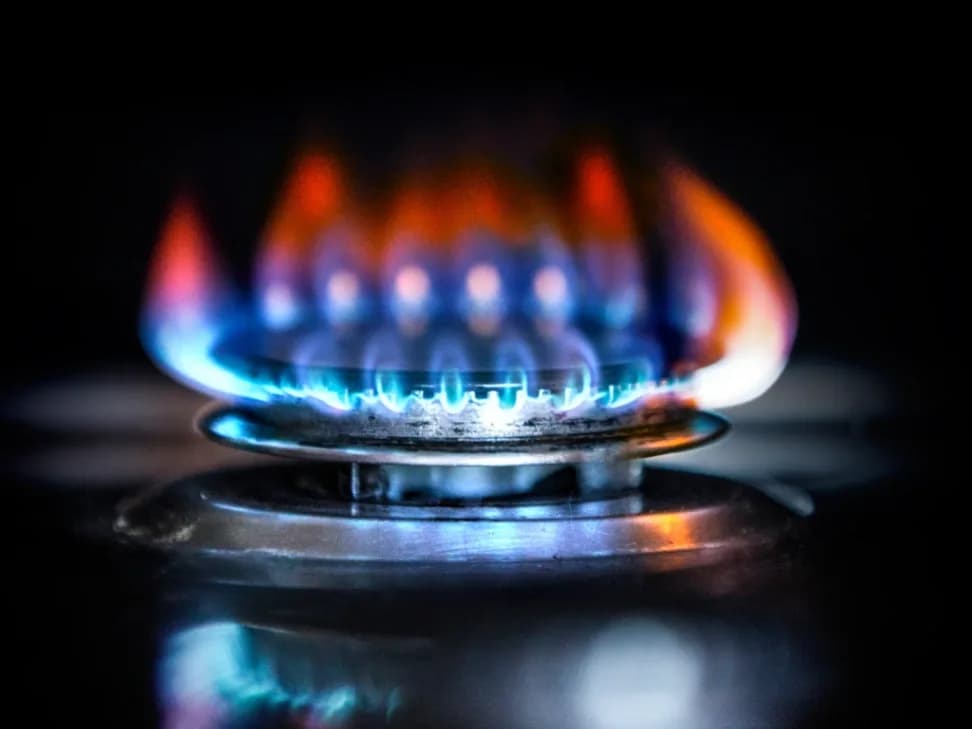
Crisp blue: normal
A steady blue flame with a lighter blue inner cone means the burner is getting the right mix of gas and air.
The odd orange flicker: usually fine
Dust or food residue burning off can tint the tips for a moment. It should settle back to blue.
Mostly yellow or orange: get it checked
A lazy, floppy yellow flame points to poor combustion, often a blocked or dirty burner. Stop using it until it's looked at.
Soot, lifting or noisy flames: stop using it
Black marks on pots, flames lifting off the burner or roaring all need a licensed gas fitter before the appliance is used again.
Why have your gas checked
Caught early, a gas fault stays small.
Regular gas safety checks protect the people in your home, and the appliances you rely on every day.
Lower fire risk
Leaks and poor combustion are found before they can become a fire or explosion hazard.
Carbon monoxide caught
Badly burning appliances are picked up before anyone feels headaches, dizziness or nausea.
Appliances that last
Burners, regulators and connections in good order work less hard and wear more slowly.
Corrosion spotted early
Rusting or damaged gas lines are found while the repair is still small.
Safe and compliant
We check your appliances against current Australian safety standards.
Peace of mind
You know your gas system is sound, and so does everyone who lives with you.
Why Evermore for gas leaks
Licensed gas fitters, proper detection gear, and the price before any repair starts.
Same-day emergency service during operating hours, and a 12-month workmanship guarantee on the repair.
Gas leak FAQ
Gas leak questions, answered plainly.
Can't see yours? Our friendly team is happy to help.
Natural gas and LPG have no smell of their own, so suppliers add an odorant that smells like rotten eggs or sulphur. If you notice that smell indoors or near the meter, treat it as a leak.
Once you're outside, call your gas distributor's or retailer's emergency line, which is usually printed on your gas bill. If there's a fire or someone is unwell, call 000. Then call a licensed gas fitter to find and repair the leak.
Please don't go looking. If you can smell gas, the safe move is to leave and call. Leak testing is a job for a licensed gas fitter with the right equipment, and any repair to gas pipework must be done by one.
Yes. Leaking gas and carbon monoxide from a badly burning appliance can both cause headaches, dizziness, nausea and tiredness. If symptoms ease when you leave the house, get everyone outside and have the gas checked. If anyone is very unwell, call 000.
A pressure test tells us whether gas is escaping, and testing sections of the line in turn narrows down where. An electronic detector and leak detection fluid then pinpoint the joint, so we only open up what we have to.
The supply stays off until the leak is repaired and the line passes a pressure test. Many leaks at fittings and appliances are repaired in the same visit. If a section of pipe needs replacing, we'll explain the work and the price first.
Yes. Our licensed gas fitters repair leaking fittings, pipework and appliance connections, then retest the line before the gas goes back on.
More Plumbing & Gas services
More gas and plumbing help
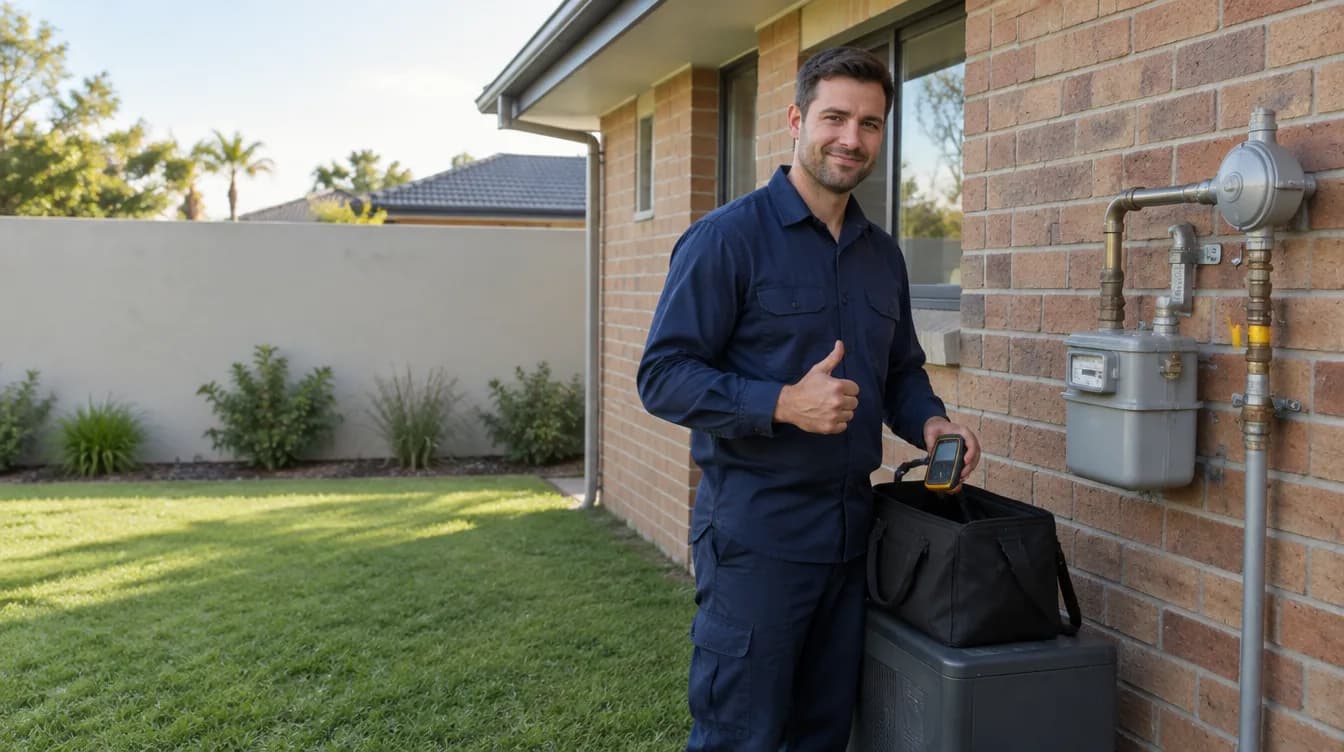
Think you have a gas leak?
Safe first, then sorted properly.
If you can smell gas, leave and call the emergency line first. For anything else, call the office or send us the details and a licensed gas fitter will take it from there.