




In this guide
Why clearing it doesn't always last
Plungers, drain snakes and even jetting clear what's in the way. They don't change why it collected there. If the cause is still in the line, waste can start building up against it again as soon as the drain is back in use.
So the useful question after the second or third blockage isn't how to clear it. It's what keeps catching.
Common reasons a drain keeps blocking
- 1
Tree roots
Roots look for moisture and can work their way in through cracks and joints. Clearing them often helps for a while, but they may grow back while the opening is still there.
- 2
Fat, oil and grease
It goes down the kitchen sink as a liquid, then cools and coats the pipe. Each layer narrows the line and catches more.
- 3
Wipes and sanitary products
Even products labelled flushable can snag in a line, especially one that's already rough or narrowed.
- 4
A cracked or displaced pipe
A joint that has shifted creates a lip for waste to catch on. Older pipework and ground movement can both play a part.
- 5
Not enough fall
Drains rely on a steady slope. If a section has sagged or was laid too flat, water can sit there and drop what it's carrying.
- 6
Hair and soap
In showers and basins, hair and soap residue bind together close to the outlet. This one is often a local build-up rather than a problem further down.
Clues about where the problem is
Where and how it blocks can narrow things down before anyone lifts a lid.
- One fixture only usually points to that fixture's branch line.
- Several fixtures together, or a gurgling toilet when the shower drains, can point to the main line.
- Worse after heavy rain can suggest stormwater getting into the system, or ground movement.
- Trees close to the line are worth mentioning when you call.
How a plumber finds the actual cause
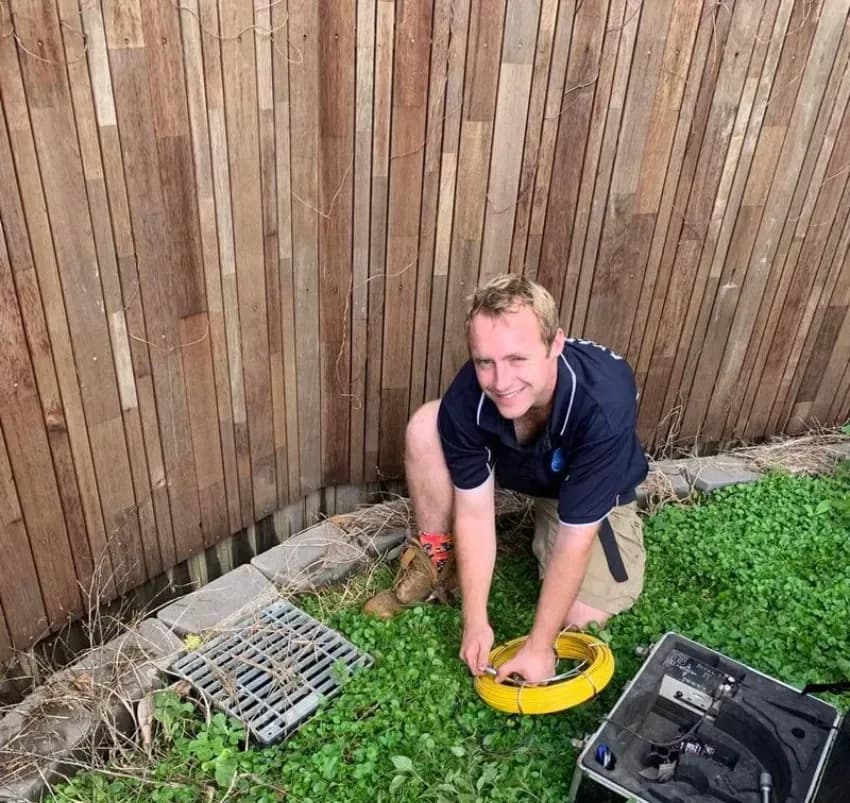
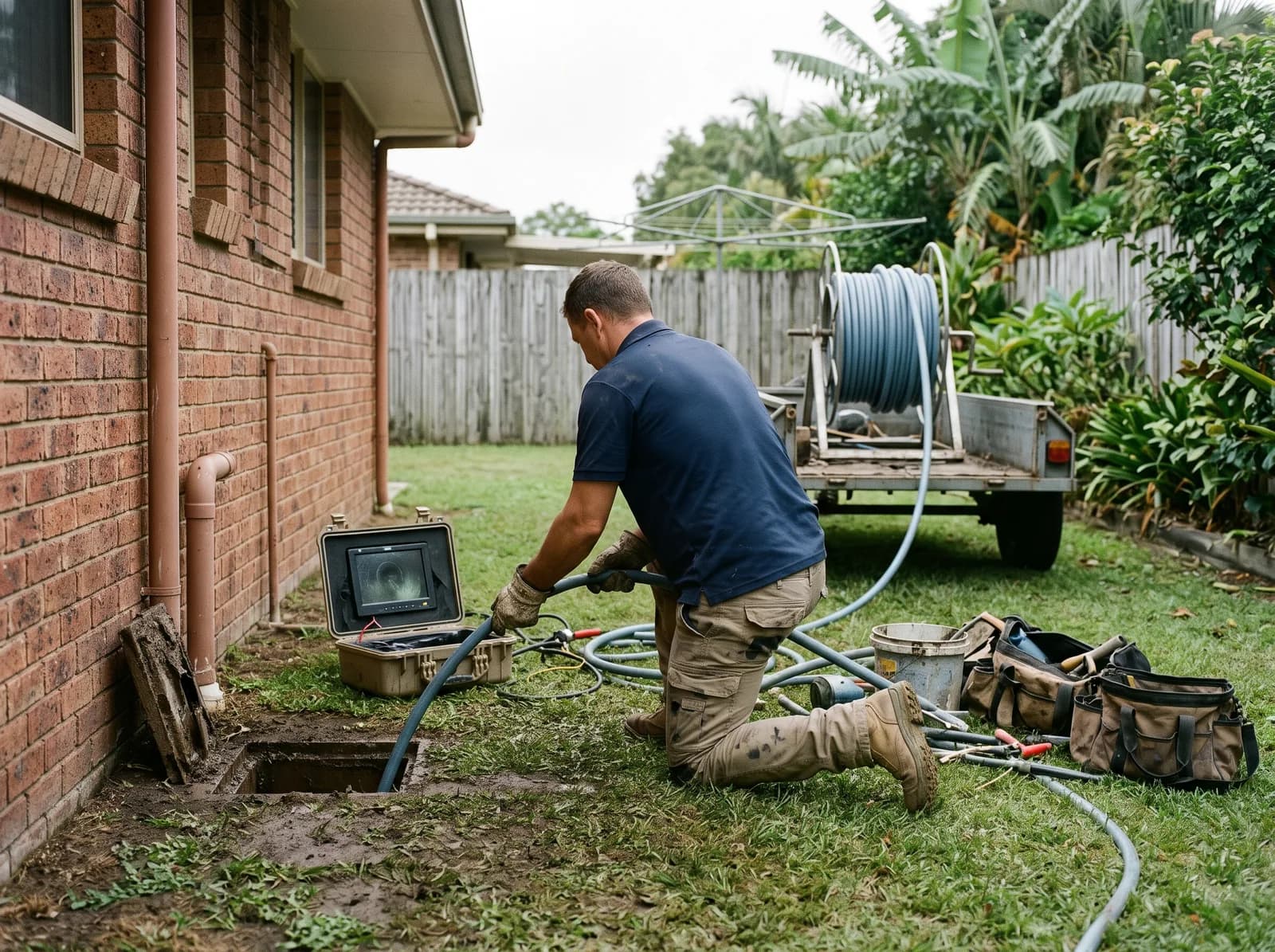
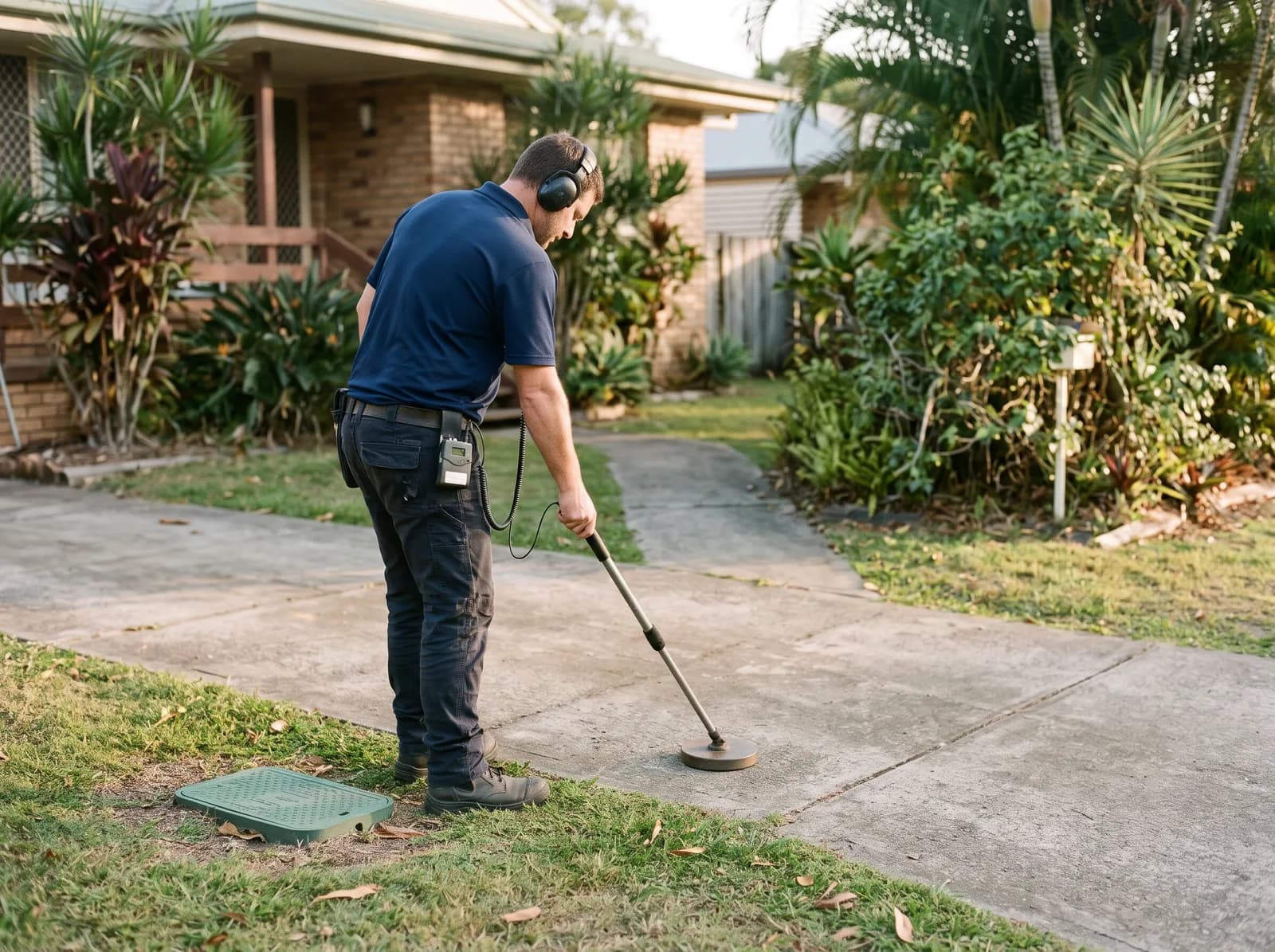
A CCTV camera lets us look along the inside of the pipe, rather than guess from the surface. It can show roots, cracks, displaced joints and sections holding water, and a pipe locator helps work out where that spot is on your property.
Then the repair can match the fault. Sometimes that's jetting and better habits. Sometimes a section of pipe needs relining or replacing.
What you can do in the meantime
- Wipe out greasy pans before washing them, and put fat in the bin once it's cooled.
- Keep wipes, sanitary products and cotton buds out of the toilet.
- Use strainers in showers and sinks.
- Avoid repeatedly pouring drain chemicals into a line that keeps blocking. They're unlikely to fix the cause, and they can be hazardous for whoever opens that drain next.