



Acoustic leak detection
A leak you can't see, found by listening for it.
Water escaping from a buried pipe makes a sound. With acoustic leak detection we trace your water service, listen along it at ground level and narrow the leak down to a spot, so any digging is planned rather than guessed.
The short version
- 1For the underground pipe between your meter and the house
- 2Pipe locator first, then ground microphones along the line
- 3You'll know what we found, and the repair options, before any digging
How acoustic leak detection works
Four steps from a hunch to a marked spot.
Underground leak detection is part test, part tracing and part careful listening. Tap through each stage.
Is water leaving the system?
Meter test
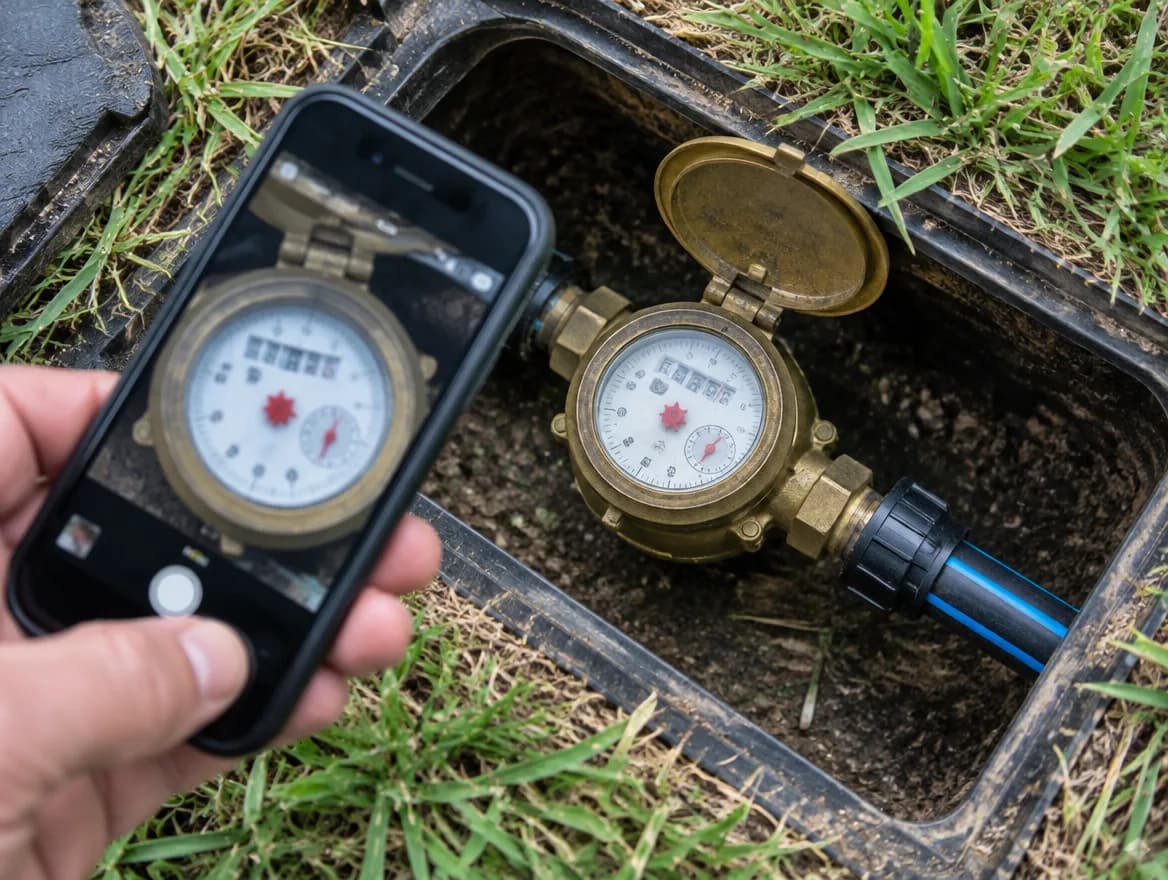
With every tap and appliance off, the water meter should sit still. If its dial keeps creeping, water is going somewhere. It's the first thing we check, and something you can check yourself.
Why it matters
It confirms there's a leak before anyone spends time looking for one.
How to do a water meter test
Check for a hidden leak in about half an hour.
No tools needed. If the meter moves while nothing is running, it's worth a closer look.
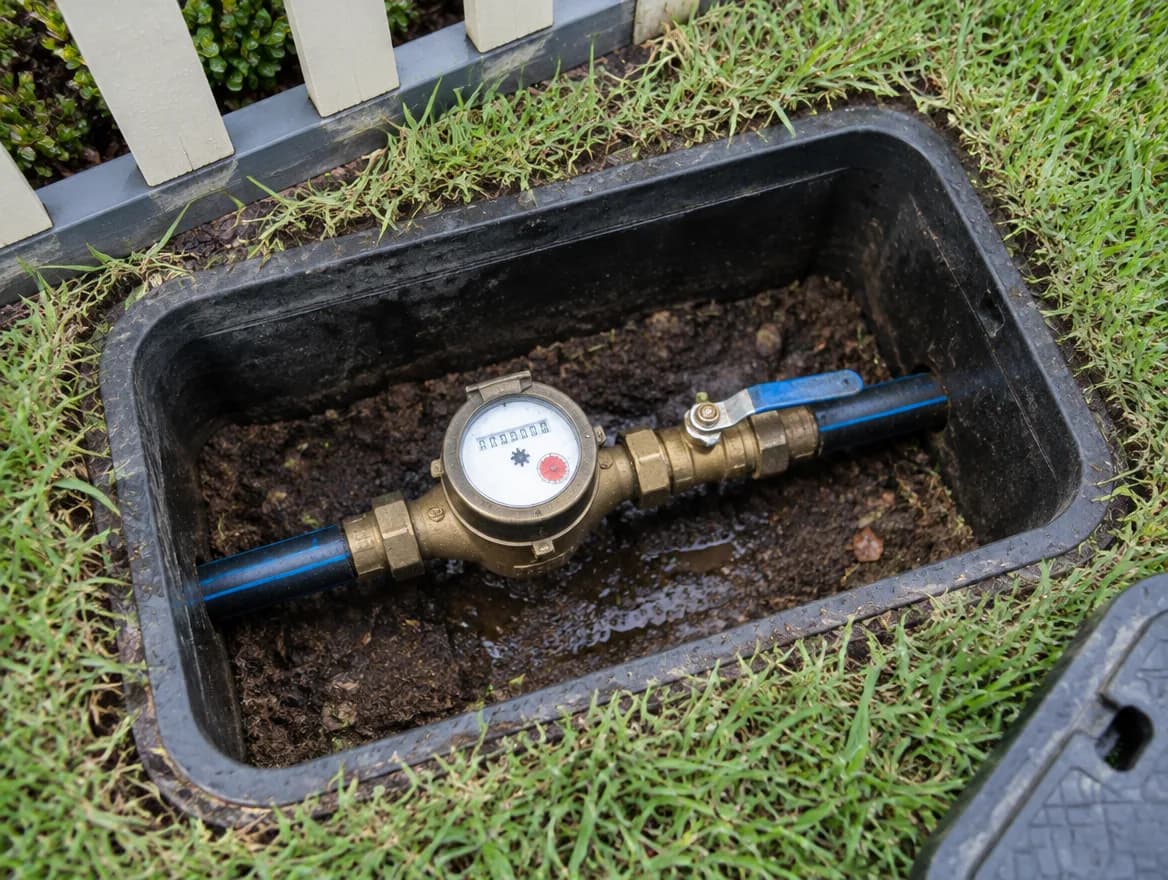
Find your meter
Usually in a small in-ground box near the front boundary. Lift the lid carefully and check for spiders.
Turn everything off
Taps, showers, toilets mid-fill, the washing machine, dishwasher, garden hoses and any irrigation timer.
Note the reading
Take a photo of the numbers and the small dial or red indicator.
Wait 30 minutes
Keep everyone off the water, then read the meter again.
Compare
Any movement means water is leaving the system. A leaking toilet cistern is a common indoor cause, so check those too.
Water meter leaking: who is responsible?
It usually depends on which side of the meter.
As a general rule in South East Queensland, the dividing line is the water meter. The exact boundary is set by your water provider, so check with them if the leak is close to it.
Usually your water provider
- The water main in the street
- The connection from the main to your meter
- The meter itself, including a leaking meter body
Usually the property owner
- The pipe from the meter outlet to the house
- Fittings, valves and taps along that line
- Pipes inside the home
Providers differ by council area: Urban Utilities in Brisbane, Unitywater in Moreton Bay, and Logan and Redland City Councils in their areas. If water is pooling around the meter itself, call your provider first.
Take dated photos of the meter reading and any wet ground. They help if you're talking to your provider about a high bill, or to your insurer about damage.
Meter moving with the taps off?
Tell us what the meter test showed and roughly where the pipe runs. We'll explain how we'd find it and what's likely to be involved.
Why underground water services leak
The pipe sits under pressure in ground that moves.
Your water service is pressurised all day and night, so a small weakness can let out a lot of water without a puddle ever showing. Here's what tends to wear a Brisbane water service out.
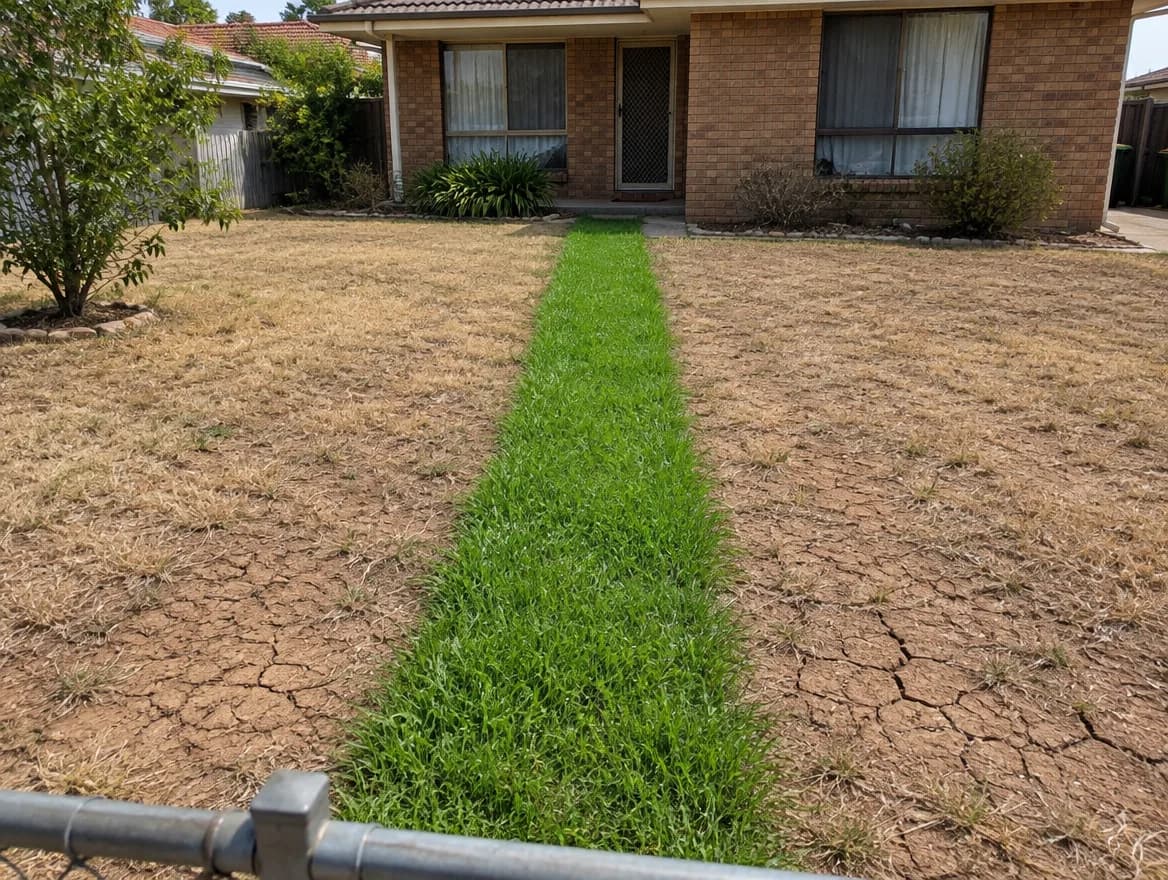 01
Reactive clay shrinks as it dries and swells after rain. That movement can strain joints and crack older pipe. A strip of greener grass in a dry yard is a classic clue.
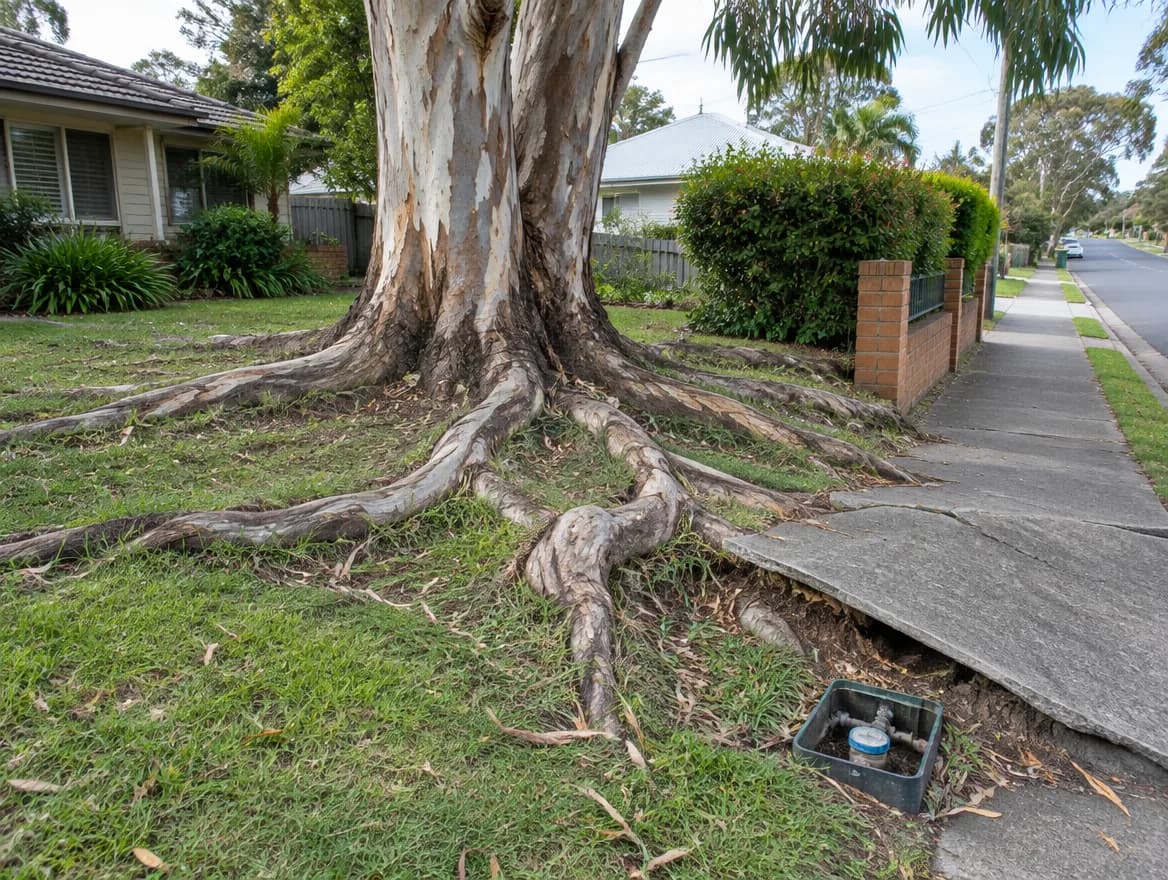 02
Large trees close to the boundary can press on a buried pipe or grow around a weak joint. Lifting paths near the meter are worth noticing.
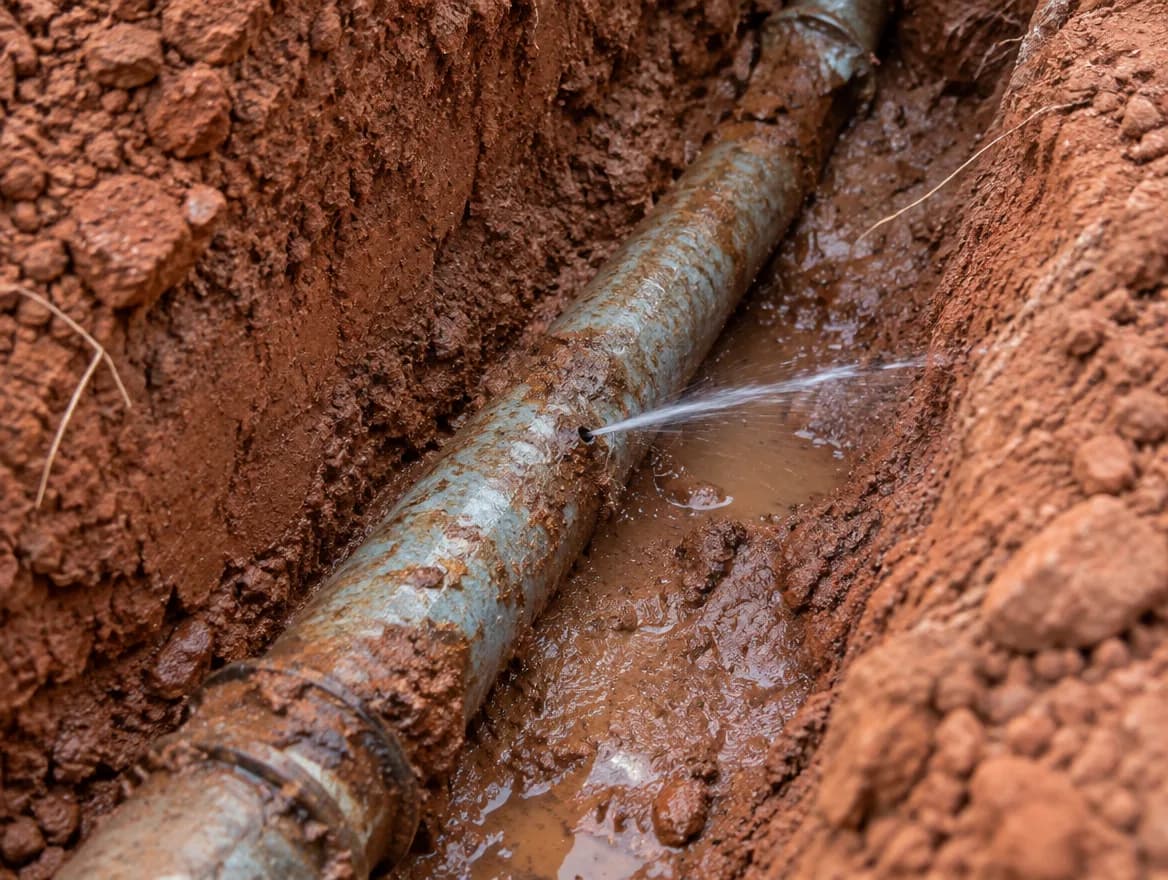 03
Galvanised steel corrodes from the inside and copper can develop pinholes over time. Fittings and joints are where many leaks start.
Underground leak detection, on the day
What happens when we come to find it.
A typical visit for a suspected leak on the water service. Every yard is different, so we'll adjust as we go.
Step 01
Confirm it, then trace the line
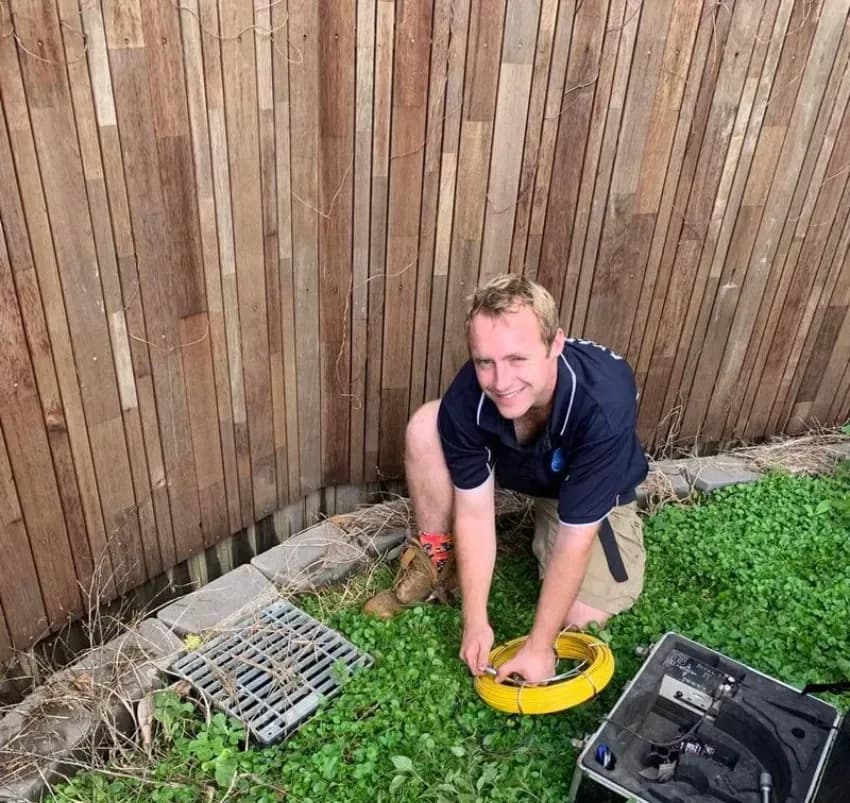
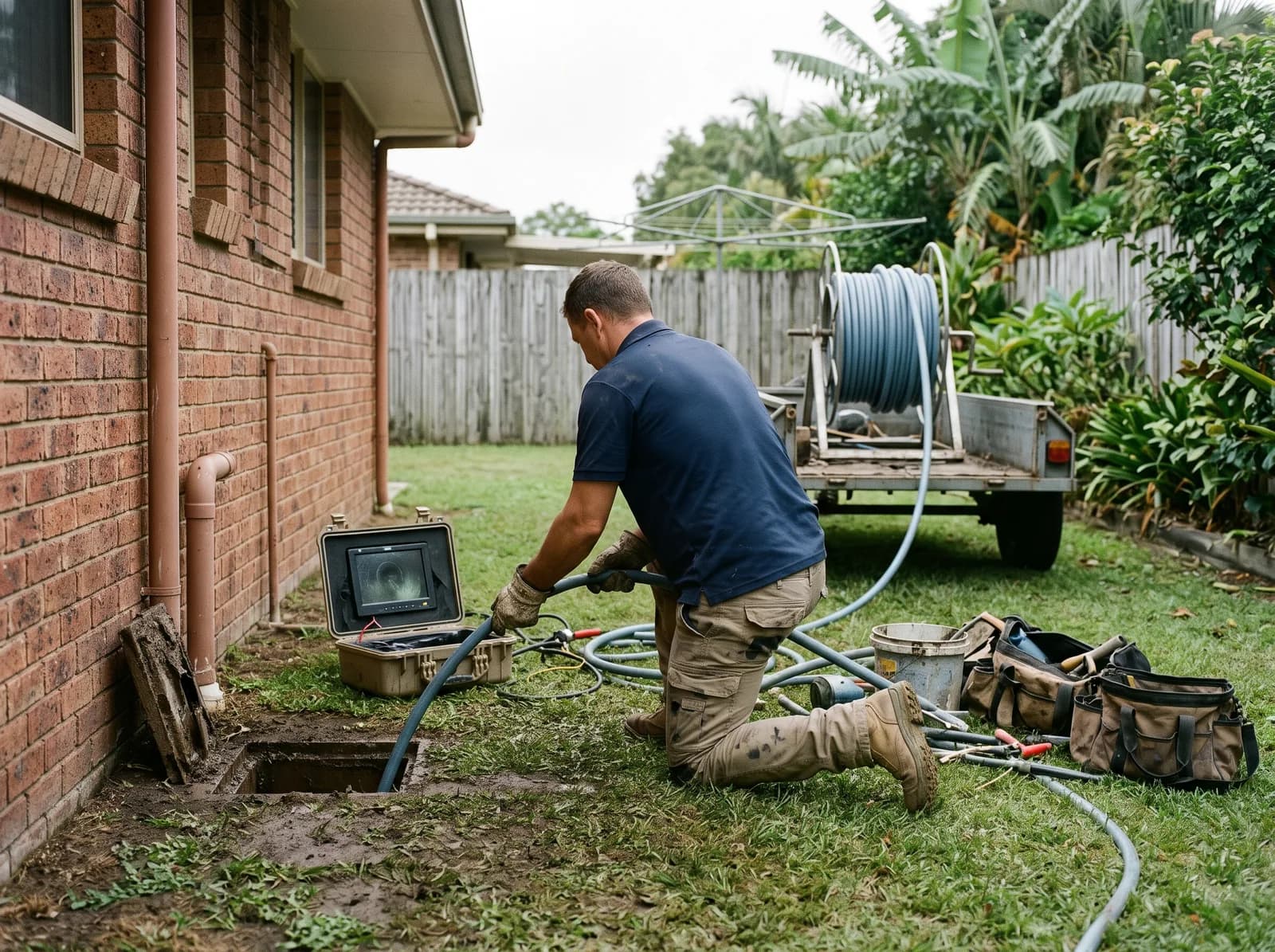
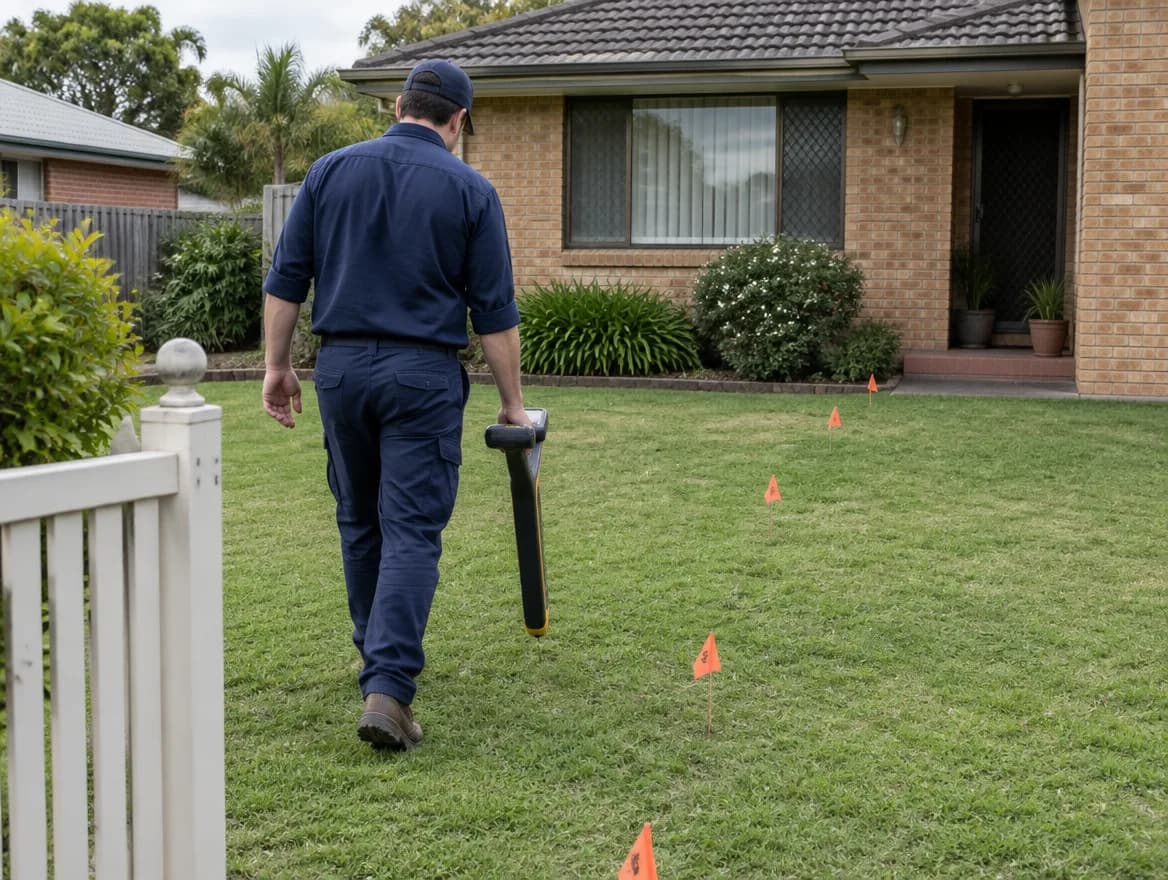
We repeat the meter test with you and rule out indoor culprits like a running toilet cistern. Then our pipe locator follows the service from the meter to the house, and we flag the route as we go.
Step 02
Listen along the line
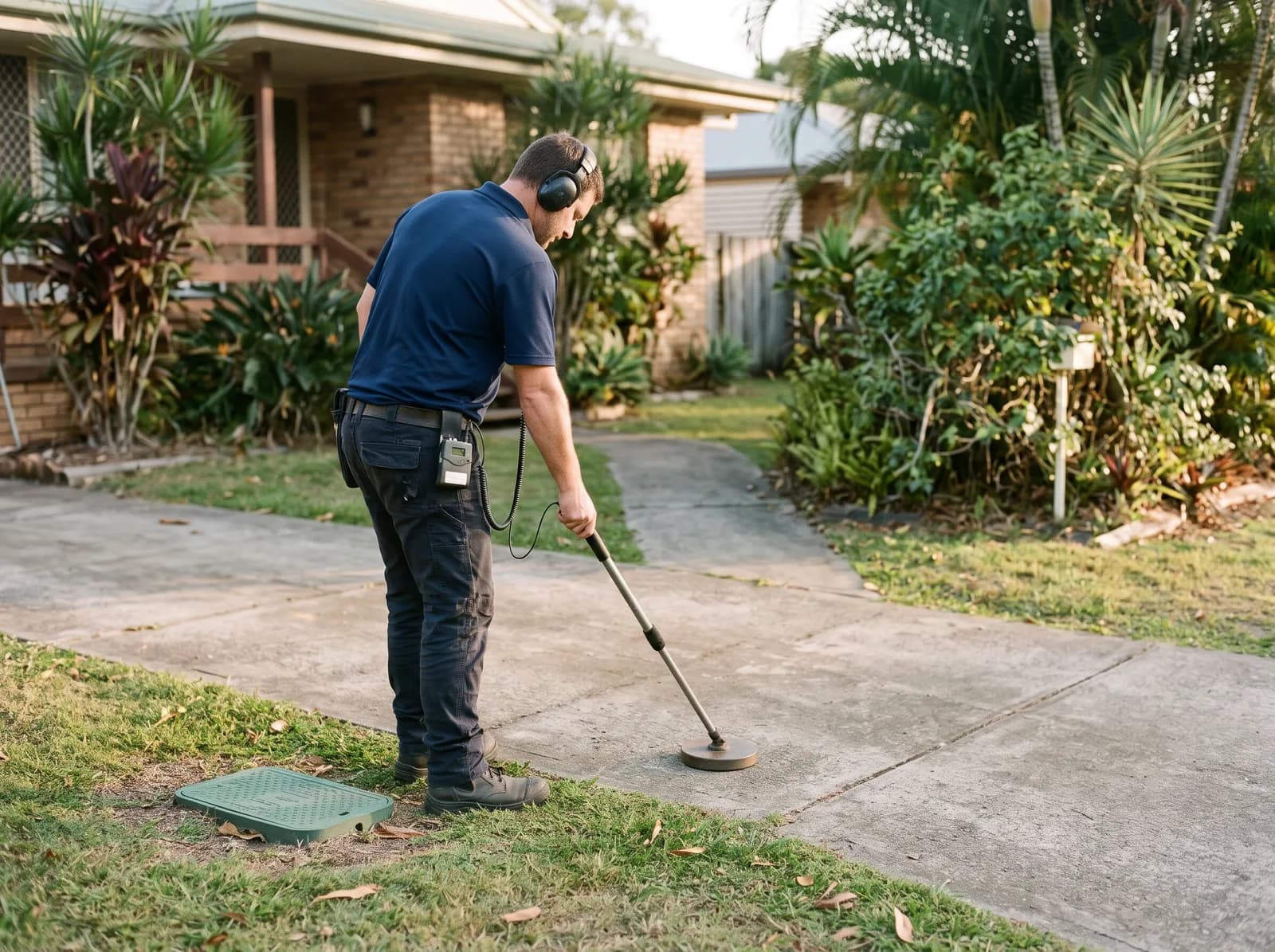
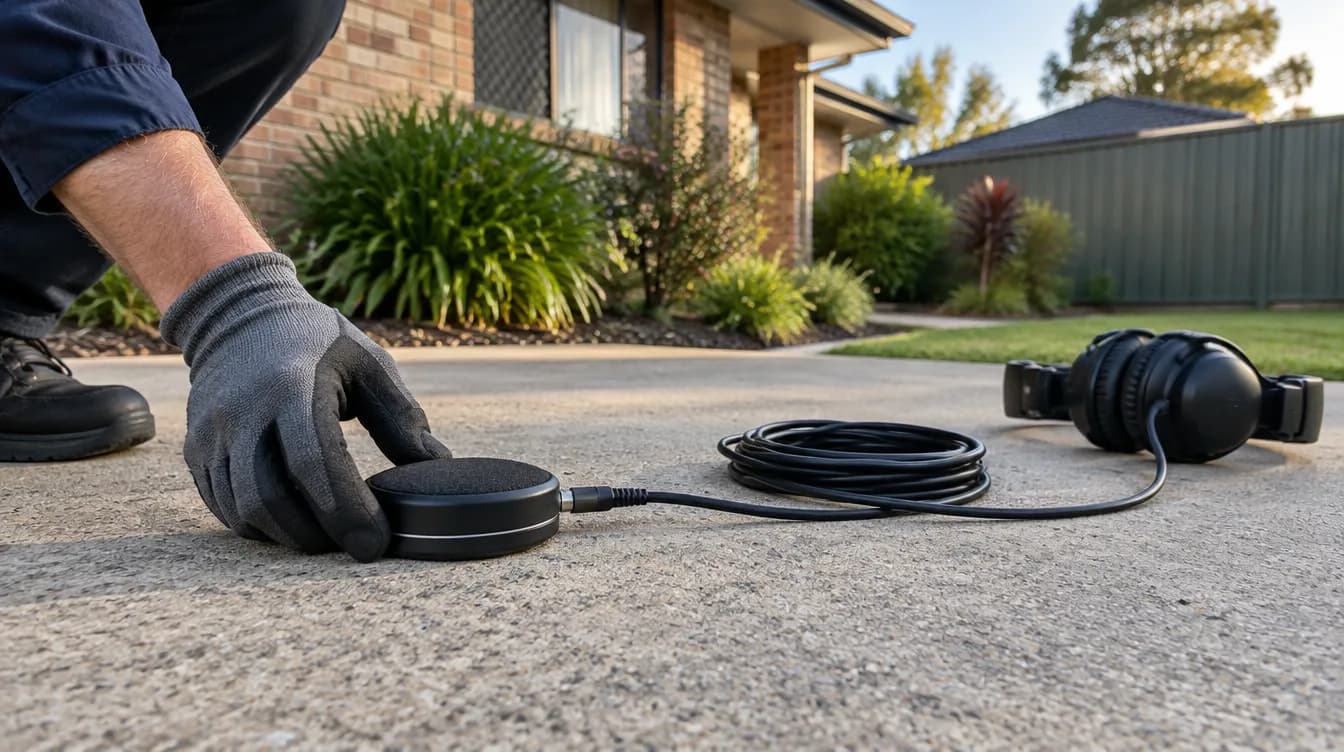
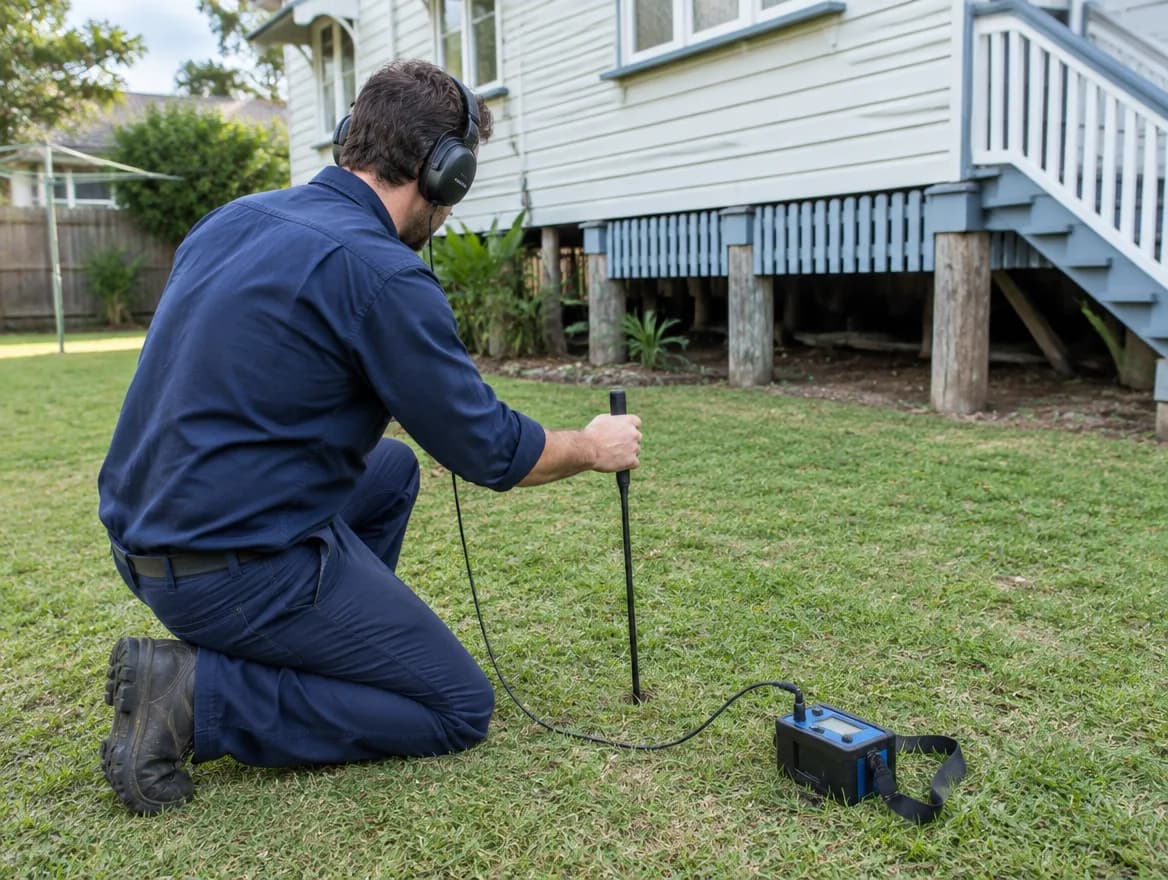
Ground microphones on hard surfaces, or a probe on softer ground, pick up the sound of escaping water. We compare readings point by point until they narrow to one area.
Step 03
Mark the spot
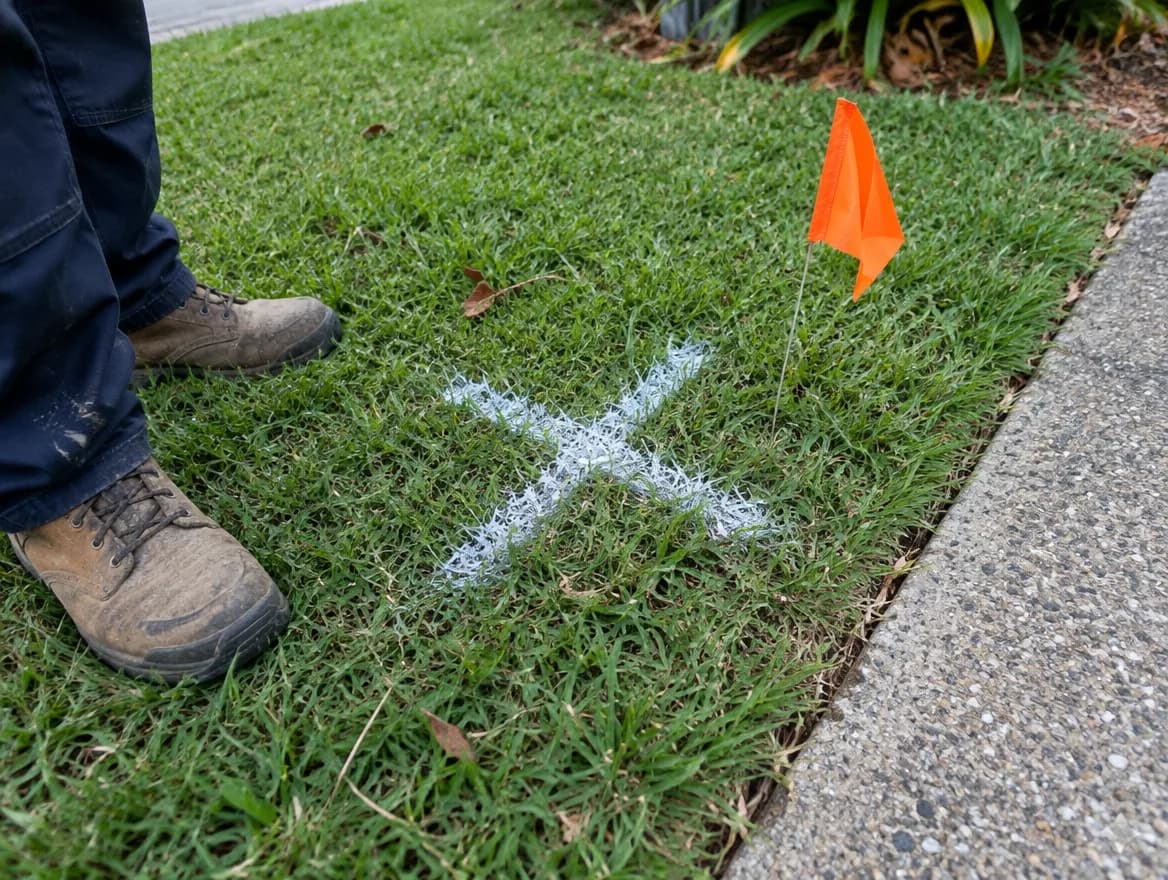
When the readings agree, we mark the most likely leak position on the ground so the repair can start in the right place.
Step 04
Explain the repair options
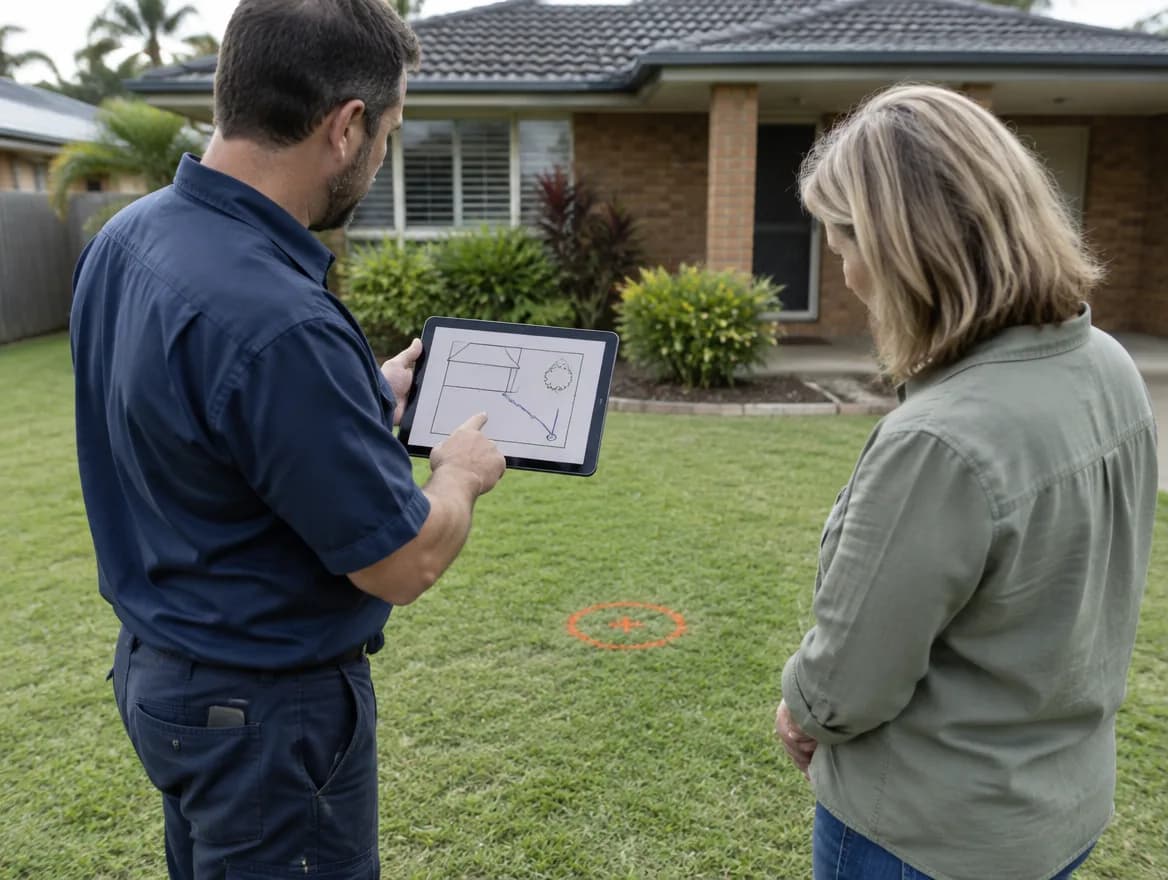
We show you why we think the leak is there and explain the choices: a targeted section repair, or replacing the line if it's tired. You'll know the price before we start.
Acoustic listening gear and pipe locators are part of our own kit. Where a dig needs an excavator, it's hired in with a trained operator.
Underground leak FAQ
Questions about finding buried leaks.
Can't see yours? Our friendly team is happy to help.
We confirm it with a meter test, trace the route of the water service with a pipe locator, then listen along that route with ground microphones. The leak's sound is loudest closest to the source, which lets us narrow it to a spot before anything is dug.
It usually narrows a leak to a small area, but it isn't perfect. Depth, soil, pipe material, background noise and hard surfaces all play a part. We'll tell you how confident the readings are before you decide on a repair.
To repair a buried pipe, some digging is normally needed. The point of finding the leak first is to keep that dig targeted rather than trenching the whole line. If the line is old and failing in several places, replacing it may make more sense, and we'll explain why.
It could be. Start with the meter test on this page. If the meter moves with everything off, check toilets for a silent leak first, then give us a call. A leak in the buried service is one of the most common reasons for an unexplained jump.
In most cases the meter belongs to your water provider, so report it to them first. If the leak is on the house side of the meter, it's usually the property owner's to fix, and that's where we come in.
Our leak detection service is set up for the underground water service between the meter and the house. If you think the leak is somewhere else, tell us what you're seeing and we'll let you know honestly whether we're the right people.
We explain what we found and the repair options, with the price, before any work starts. Depending on the pipe, that could be a section repair or a full water service replacement.
More Leak Detection services
Once the leak is found

Suspect an underground leak?
Let's find where the water's going.
Ring the office or send us your meter test result. We'll say whether it points underground and what finding it involves, with the price up front.